Heavy-Duty Protection for High-Traffic Facilities
Commercial & Industrial Floor Coating Services in San Antonio for warehouses, retail spaces, and hospitality environments requiring maintenance-friendly surfaces
Restaurant kitchens and retail spaces face constant foot traffic, spills, and cleaning that breaks down unprotected concrete, creating uneven surfaces and persistent staining that no amount of mopping can remove. Safety and anti-slip coatings from Corby Stain & Seal provide maintenance-friendly surfaces across warehouses, manufacturing facilities, offices, and hospitality flooring throughout San Antonio, with formulations selected based on the specific chemical exposure, temperature conditions, and traffic intensity each facility encounters. Heavy-duty floor protection extends beyond simple appearance, creating surfaces that remain level and safe even after years of use.
The coating selection process evaluates the floor's current condition, the types of chemicals or liquids the surface contacts daily, and whether the space requires slip resistance or easy-clean properties. Warehouse and manufacturing facilities typically need abrasion-resistant systems that withstand forklift traffic, while restaurant and hospitality flooring requires coatings that resist grease, acids from cleaning chemicals, and thermal shock from hot water cleaning.
Schedule a facility walk-through to identify high-wear zones and discuss coating formulations engineered for your operational demands.
The Difference Between Commercial and Residential Coatings
Commercial installations require more aggressive surface preparation than residential projects because existing coatings, oils, and contaminants must be completely removed to achieve the bond strength necessary for heavy equipment loads. Surface profiling opens the concrete's pore structure through shot blasting or diamond grinding, creating the anchor pattern that prevents delamination under stress. Multi-layer systems build thickness incrementally, with each coat contributing specific properties—base coats for adhesion, build coats for thickness and chemical resistance, and topcoats for UV stability or slip resistance.
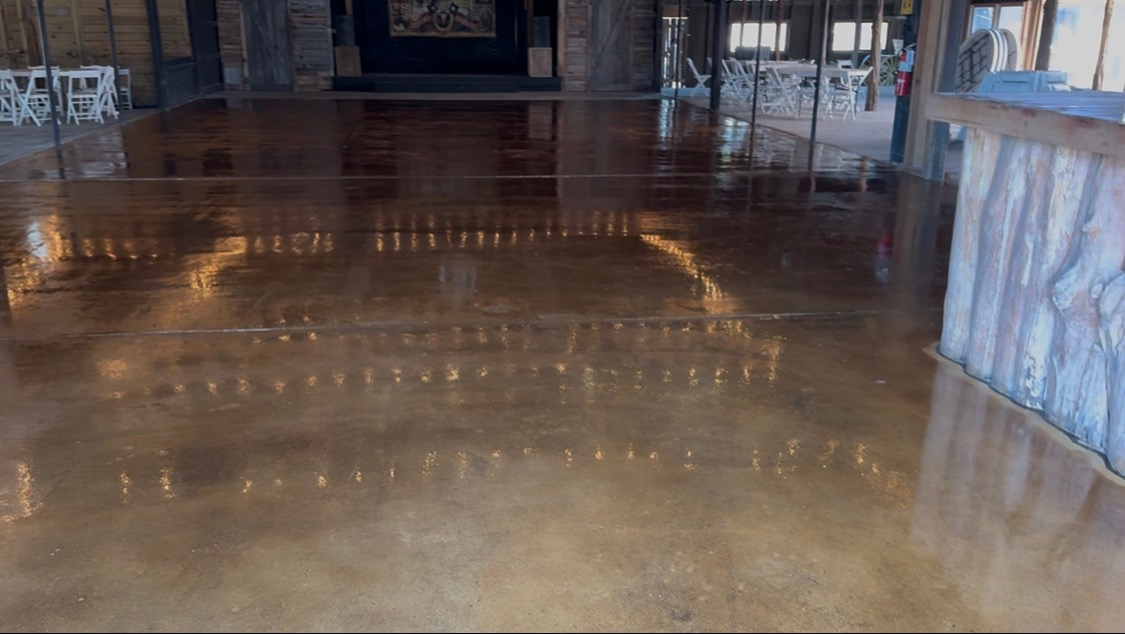
Finished floors show consistent color and sheen across large areas, with slip-resistant aggregates visible in safety-critical zones like ramps or wet areas. Surfaces clean efficiently because spills and tracked-in dirt no longer penetrate into the concrete, reducing labor time and water usage during routine maintenance. Anti-slip coatings maintain traction even when wet, addressing liability concerns in public-facing retail and hospitality environments.
Commercial floor coating services include surface evaluation, crack and joint repair, and coating installation, but do not address structural slab issues like settlement or severe cracking that requires concrete replacement. Facilities operating twenty-four hours may need phased installations that coat sections sequentially to maintain partial operations. Color and texture options accommodate branding requirements in retail offices while providing the durability necessary for back-of-house warehouse and kitchen areas.
Common Questions About This Service
Facility managers and business owners often ask about installation logistics, coating performance under specific conditions, and long-term maintenance expectations.
How do you minimize downtime during commercial floor coating projects?
Installations are scheduled during off-hours or slow periods, and fast-cure polyaspartic systems allow sections to return to service within hours rather than days, reducing operational disruption.
What makes a coating system slip-resistant?
Aluminum oxide or silica aggregates are broadcast into the topcoat to create surface texture that maintains traction when wet, with aggregate size and density adjusted based on the expected slip hazard level.
When should commercial floors be recoated?
High-traffic retail and hospitality floors typically need recoating every five to eight years, while lower-traffic office spaces and warehouses with proper maintenance can extend coating life to ten or twelve years before wear becomes noticeable.
How do coatings perform in freezer or cold storage environments?
Specialized formulations resist thermal shock and remain flexible at low temperatures, preventing the cracking and delamination that occurs when standard epoxies are subjected to freezer conditions in San Antonio food distribution facilities.
What preparation is required before coating installation?
Facilities need to remove all equipment and inventory from the work area, and any active moisture issues or structural damage must be addressed before coating application to prevent future failure.
Corby Stain & Seal works with commercial and industrial clients to develop coating specifications that meet performance requirements while accommodating budget and schedule constraints. Request a project proposal that includes coating options, installation timelines, and maintenance guidelines specific to your facility type.