
Surfaces Designed for Visual Impact
Metallic Epoxy Flooring in San Antonio for retail showrooms and residential interiors requiring luxury finishes
Metallic epoxy pigments interact with the coating as it cures, creating swirling, marbled effects that shift appearance based on viewing angle and lighting—no two installations look identical even when using the same color combination. The high-gloss finish reflects light dramatically, making the floor a design focal point in showrooms, retail boutiques, residential living areas, and any space where appearance carries as much weight as durability. Corby Stain & Seal applies metallic systems to concrete floors across San Antonio, manipulating pigment movement during installation to control the pattern intensity and color blending that defines the final look.
Installation requires the same concrete preparation as standard epoxy—grinding, crack repair, thorough cleaning—followed by metallic pigment application using techniques that encourage or restrict pigment flow depending on the desired pattern. The coating self-levels as it cures, creating the characteristic depth and movement that distinguishes metallic floors from solid-color or flake systems, then receives clear topcoats for protection and enhanced gloss.
Arrange a design consultation to review metallic color options and view photos of completed installations.
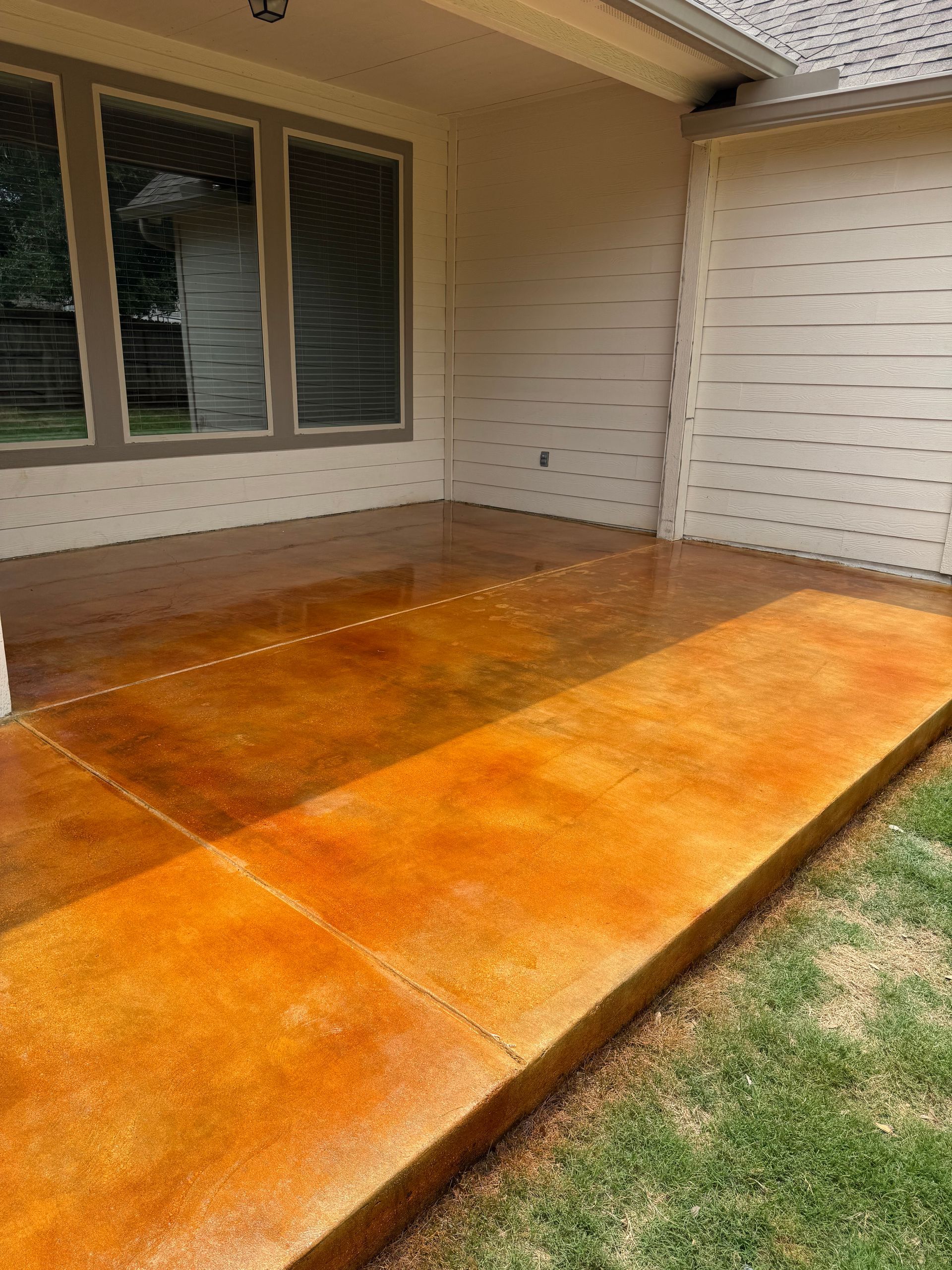
What Makes Metallic Floors Unique
The pigments create three-dimensional depth as light penetrates the clear topcoats and reflects off metallic particles suspended at different levels within the cured epoxy, producing effects that range from subtle shimmer to bold, high-contrast patterns resembling molten metal or natural stone. Custom color combinations layer multiple metallic tones—copper with black, silver with blue, gold with burgundy—to match branding colors in commercial spaces or complement interior design palettes in residential applications. Because the pattern develops organically during curing, each floor becomes a one-of-a-kind installation rather than a repeatable, uniform appearance.
After completion, the surface delivers the same chemical resistance and durability expected from quality epoxy systems, with added visual interest that elevates the space beyond standard flooring solutions. Retail environments use metallic floors to create upscale atmospheres that influence customer perception, while residential installations in living rooms, kitchens, or basements add contemporary design elements that stand out from traditional flooring materials. The high-gloss finish requires occasional cleaning to maintain its reflective quality, though the non-porous surface resists staining and cleans easily with standard floor care products.
Lighting design significantly affects how metallic floors appear—spaces with abundant natural light or focused accent lighting showcase the color shifts and depth most effectively, while lower-light areas produce more subdued effects. The reflective surface also amplifies available light, reducing the need for additional fixtures in some applications.
Questions Before Starting Your Project
Clients considering metallic epoxy often want to understand pattern control, maintenance requirements, and how these floors perform beyond their aesthetic appeal in San Antonio conditions.
How much control do you have over the final pattern in a metallic floor?
Applicator technique influences pigment movement and color blending during installation, but the organic nature of metallic systems means the exact pattern cannot be predetermined—mockups and prior project photos show the general effect rather than an exact preview.
What happens to the glossy finish as the floor ages and receives foot traffic?
The clear topcoat bears the wear, and its gloss level gradually diminishes in high-traffic paths, though periodic recoating restores the original shine without disturbing the metallic layer underneath.
Can metallic epoxy handle the same abuse as standard epoxy in garages or workshops?
The system's durability matches any quality epoxy installation, though most clients choose metallic finishes for spaces where appearance takes priority over heavy industrial use—the reflective surface shows scratches and wear more readily than textured or matte coatings.
How do metallic floors respond to San Antonio's temperature extremes in spaces without climate control?
Epoxy remains dimensionally stable across typical temperature ranges, and the metallic pigments don't fade or change color with heat exposure, though thermal cycling can stress any coating if the underlying concrete moves significantly.
What's involved in maintaining the high-gloss appearance over time?
Regular dust mopping or sweeping prevents abrasive dirt from scratching the surface, and damp mopping with pH-neutral cleaners maintains clarity without dulling the finish or leaving residue that obscures the metallic effects.
Corby Stain & Seal evaluates your space to confirm concrete suitability for metallic systems and discusses color concepts that align with your design intent, whether that involves bold statement floors or more restrained metallic accents. Schedule a project review to explore metallic options and view sample finishes.