Floors That Resist Industrial Chemical Exposure
Concrete Coatings & Surface Protection in San Antonio for warehouse, manufacturing, and retail spaces requiring long-term durability
Uncoated concrete in warehouses and manufacturing facilities absorbs oils, solvents, and water, leading to surface dusting, staining, and progressive deterioration that creates uneven floors and airborne particulates. Corby Stain & Seal applies polyaspartic and protective coating systems across commercial and industrial spaces in San Antonio, creating a sealed surface that resists chemical penetration and withstands forklift traffic. These high-performance coatings cure quickly enough to minimize downtime, which matters when production schedules cannot accommodate extended floor shutdowns.
The coating process involves surface profiling to open the concrete's pores, removing contaminants, and applying multiple layers that bond chemically to the substrate. Polyaspartic coatings cure faster than traditional epoxies and tolerate the temperature fluctuations common in non-climate-controlled warehouses, while UV-resistant formulations prevent yellowing in spaces with skylights or large door openings.
Arrange an on-site consultation to assess surface conditions and determine the coating system that matches your facility's chemical exposure and traffic patterns.
How Protective Coatings Address Chemical Damage
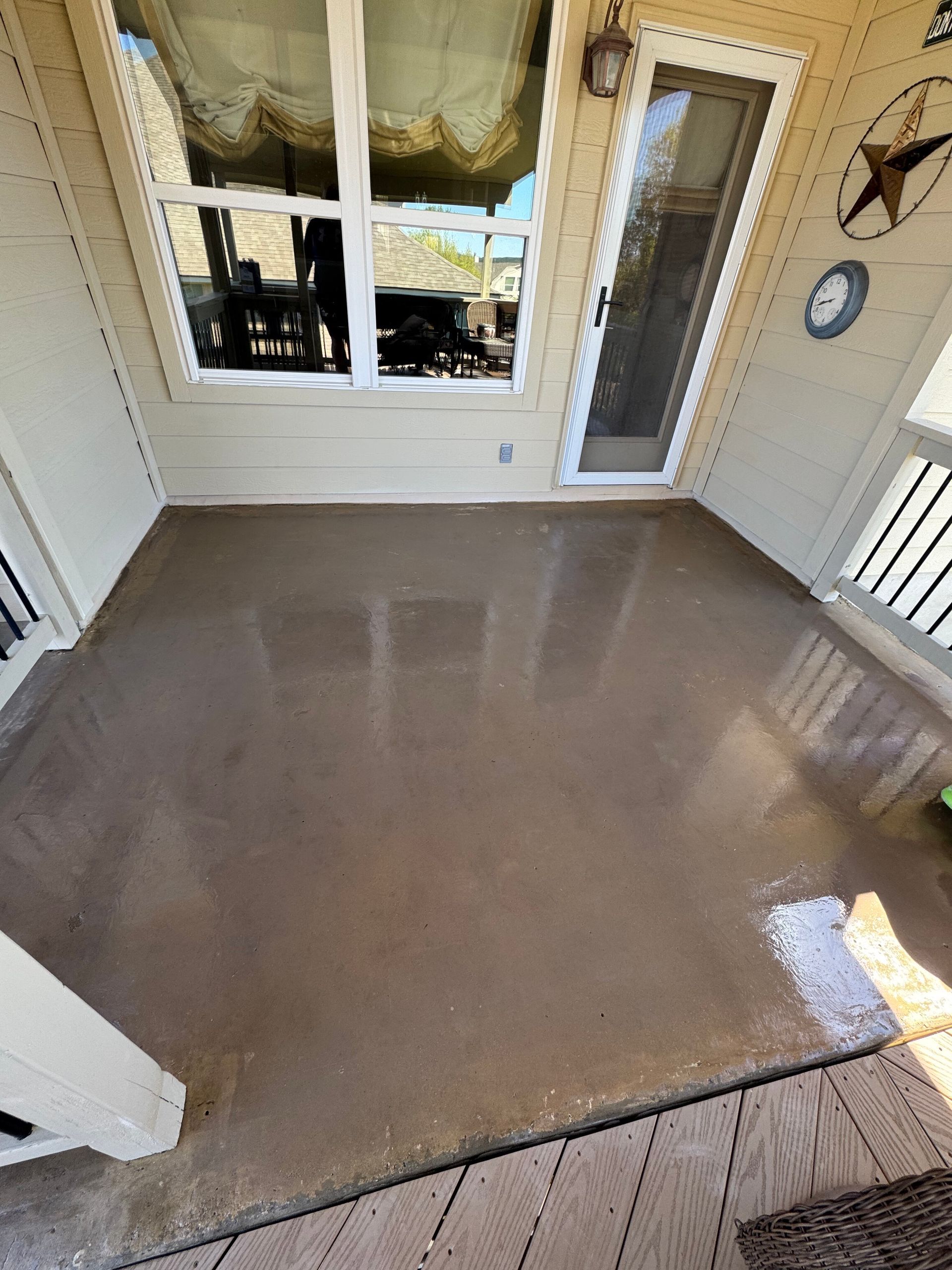
Surface preparation removes existing sealers, oils, and laitance through diamond grinding or shot blasting, creating the texture profile necessary for coating adhesion. The base coat penetrates into the concrete to form a mechanical bond, followed by build coats that add thickness and impact resistance. In areas with heavy forklift traffic or frequent spills, additional aggregate can be broadcast into the coating to increase abrasion resistance and add slip resistance when wet.
After curing, the floor surface no longer absorbs liquids or releases dust when subjected to foot traffic and equipment movement. Spills bead on the surface rather than soaking in, allowing for quick cleanup before staining occurs. The continuous, sealed surface also simplifies maintenance by eliminating the porous texture that traps dirt and requires repeated scrubbing to stay clean.
Coating systems include crack repair and joint filling as part of surface preparation, but structural repairs to severely damaged slabs fall outside standard coating applications. Facilities with active moisture issues or hydrostatic pressure need remediation before coatings can be applied. Color and finish options range from high-gloss systems that improve lighting efficiency to matte finishes that reduce glare in retail environments.
Common Questions About This Service
Business owners typically want to know about downtime, chemical resistance, and how coatings perform under specific operational conditions.
What is the difference between polyaspartic and epoxy coatings?
Polyaspartic coatings cure in hours rather than days and tolerate wider temperature ranges during application, which reduces downtime and allows installation in non-climate-controlled spaces common in San Antonio warehouses.
How do you prepare floors with existing coatings or sealers?
Existing coatings are removed through mechanical grinding that also profiles the concrete surface, ensuring the new coating bonds directly to the substrate rather than to a failing layer underneath.
When can the floor handle full traffic after coating?
Most polyaspartic systems allow foot traffic within four to six hours and vehicle traffic within twenty-four hours, though full chemical resistance develops over several days as the coating completes its cure cycle.
What types of chemicals do these coatings resist?
Properly applied systems resist oils, solvents, mild acids, and alkaline cleaners, though prolonged exposure to concentrated acids or caustics requires specialized formulations designed for that specific chemical.
How long do industrial floor coatings last?
Service life depends on traffic intensity and maintenance practices, but most commercial coatings remain functional for seven to twelve years before requiring recoating, with high-traffic zones sometimes needing touch-ups sooner.
Corby Stain & Seal evaluates substrate conditions and selects coating formulations based on the chemicals, temperatures, and equipment loads your facility encounters daily. Contact our team to schedule a facility assessment and receive a project timeline that accounts for your operational schedule.