
Surfaces That Reflect Your Design Vision
Concrete Staining Services in San Antonio for transforming plain slabs into custom-colored surfaces
Corby Stain & Seal applies both acid-based and water-based stain systems to residential and commercial concrete throughout San Antonio, creating permanent color that penetrates the surface rather than sitting on top like paint. Acid stains produce variegated, earth-tone effects through a chemical reaction with the concrete's minerals, while water-based stains offer consistent, predictable color in a broader spectrum. You'll notice the difference immediately—what was once plain gray concrete becomes a custom-finished surface with depth and character that complements the surrounding architecture.
The staining process involves surface preparation to remove contaminants that would block stain penetration, careful application of the selected stain system, and neutralization or rinsing depending on the product used. Interior applications commonly include residential floors, decorative accents, and commercial showroom spaces, while exterior work focuses on patios, walkways, pool decks, and entryways where color permanence matters under San Antonio's intense UV exposure.
Request a color consultation to review samples on your actual concrete surface.
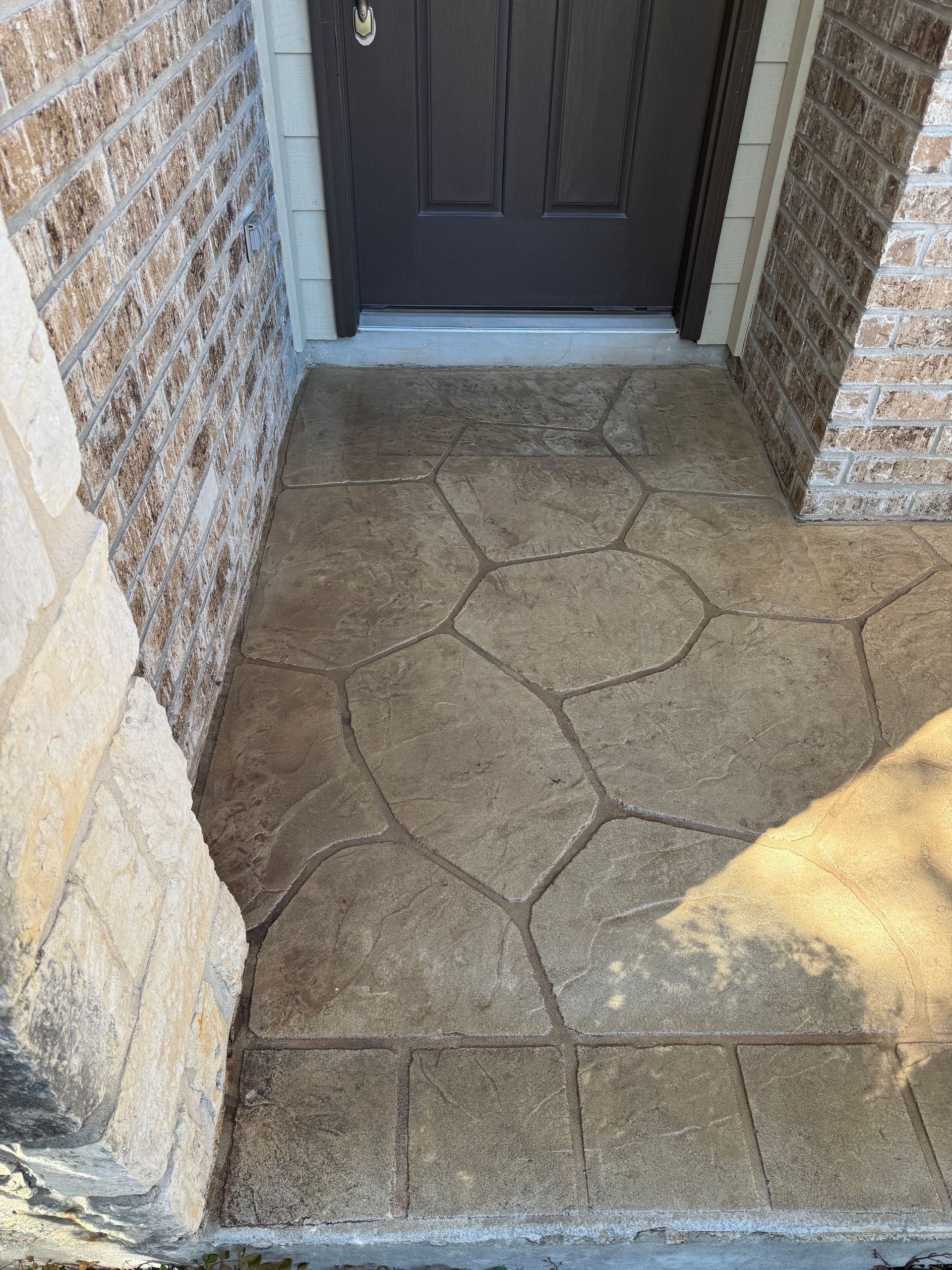
How Stain Becomes Permanent Color
Acid stains bond with calcium hydroxide in the concrete through a chemical reaction, creating earth tones like terracotta, amber, and charcoal with natural variation that follows the concrete's existing texture and mineral content. Water-based stains use acrylic polymers and pigments that penetrate the porous surface, delivering consistent blues, greens, reds, and other colors that acid chemistry cannot produce. Both systems become part of the concrete structure rather than forming a surface coating that can peel or flake away.
Once the stain cures and the surface receives a protective sealer, the color remains stable under foot traffic, furniture weight, and weather exposure. Exterior stained patios in San Antonio maintain their appearance through seasonal temperature swings and summer heat that would fade or damage surface-applied paints. Interior residential floors resist scratches from pet claws and furniture movement while showing minimal wear patterns even in high-traffic hallways and kitchen areas.
Custom color applications often combine multiple stain tones or integrate decorative sawcut patterns and stenciled designs before staining, creating one-of-a-kind floor graphics or border details. The final appearance depends on concrete porosity, age, and existing finish—newer concrete typically accepts stain more uniformly than older slabs with embedded oils or prior coatings.
What Property Owners Want to Know
Staining questions often focus on color permanence, surface preparation requirements, and how different stain types perform under San Antonio conditions.
What determines whether acid stain or water-based stain works better for a project?
Acid stain suits clients who want organic, variegated color with earth-tone palettes and accept some unpredictability in the final appearance, while water-based stain fits projects requiring specific color matching, brighter hues, or consistent results across large areas.
How does stained concrete hold up on exterior patios exposed to full sun?
UV-resistant sealers applied over the stain protect the color from fading under San Antonio's intense sunlight, and because the stain penetrates rather than coats, there's no surface layer to peel or blister when temperatures climb above 100 degrees during summer months.
What preparation does existing concrete need before staining?
The surface must be free of oils, previous sealers, adhesive residue, and contaminants that block stain penetration—preparation typically involves grinding, etching, or pressure washing depending on the slab's condition and history.
Can stain fix discolored or stained concrete?
Staining often camouflages minor discoloration by introducing intentional color variation, though existing stains from oil or rust may resist new stain penetration and create darker or lighter spots within the finished pattern.
How long does stained concrete last before needing maintenance?
The stain itself remains permanent, but the protective sealer requires reapplication every few years on exterior surfaces and less frequently indoors, depending on traffic levels and exposure to moisture or cleaning chemicals.
Corby Stain & Seal evaluates your concrete's current condition and discusses color options that align with your design intent, whether that involves matching existing interior finishes or creating a focal point on an outdoor entertainment area. Schedule an on-site assessment to review stain samples and surface preparation needs.