
Outdoor Surfaces Built to Handle San Antonio Weather
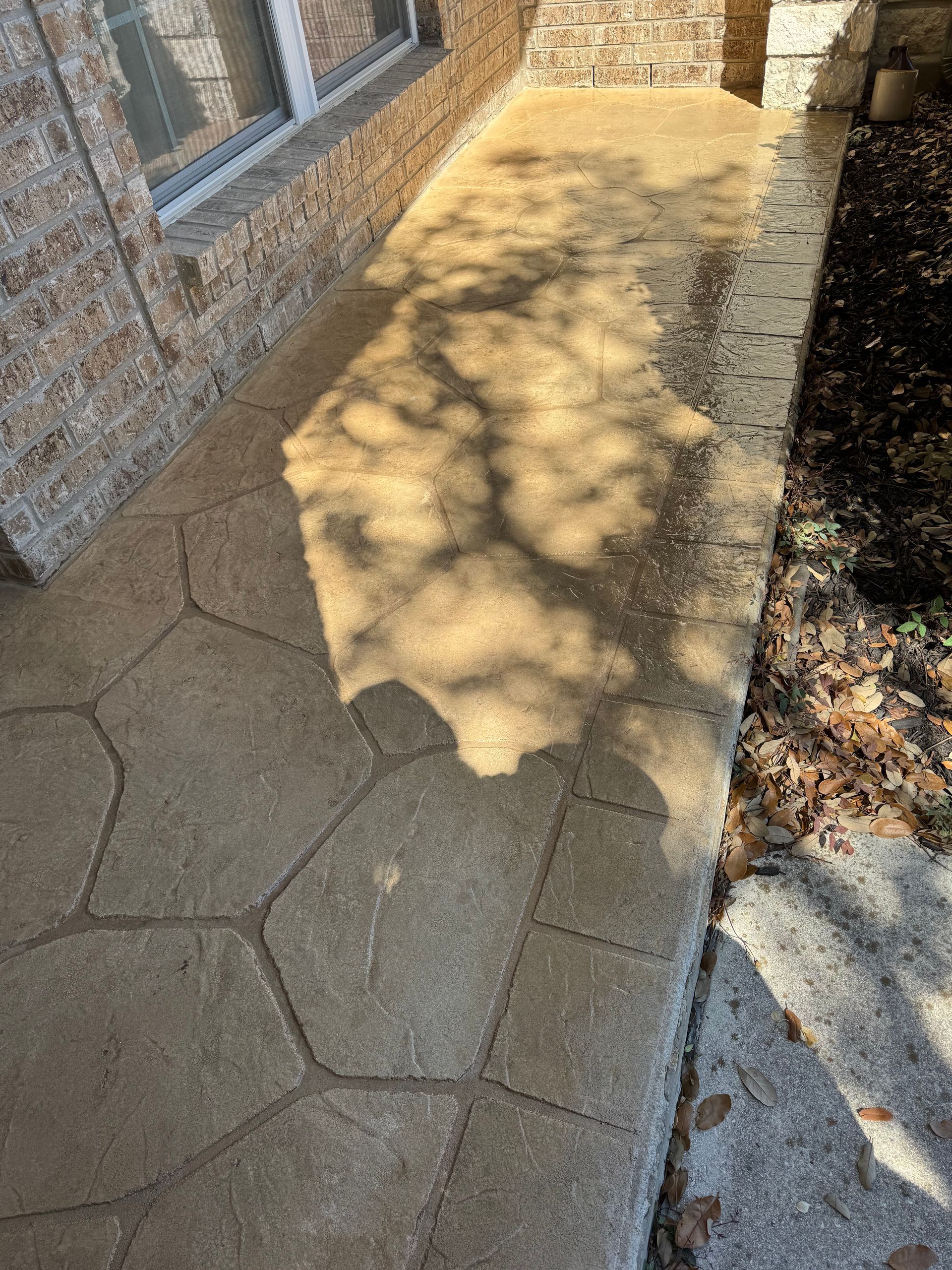
Stamped Concrete Installation in San Antonio for patios, pool decks, and walkways that replicate natural stone textures
Corby Stain & Seal installs stamped concrete surfaces that mimic stone, brick, and slate patterns across residential and commercial properties in San Antonio. The process involves pouring, stamping texture into wet concrete, and applying color layers that create the appearance of natural materials at a fraction of the cost. Property owners choose this option when they want the visual impact of flagstone or pavers without the maintenance issues that come with individual pieces shifting or settling over time.
The installation addresses the gap between plain concrete and high-cost natural stone by embedding patterns directly into the slab surface. Custom textures range from cobblestone and ashlar slate to running bond brick, with color options that match regional stone tones or create contrast against existing landscaping. San Antonio's freeze-thaw cycles and intense UV exposure require specific mix designs and sealers that prevent surface degradation and color fading.
Schedule a property evaluation to review pattern options and site-specific preparation requirements.
What Proper Stamped Concrete Requires
The work begins with subgrade preparation and forming, followed by pouring a reinforced concrete slab that meets thickness requirements for the intended use—thicker for driveways and pool decks than for walkways. Stamping mats press texture into the surface while the concrete remains workable, and release agents prevent the mats from bonding to the slab. Color comes from integral pigments mixed into the concrete or hardener powders broadcast onto the surface before stamping, with accent colors applied to grout lines for added depth.
Once cured, the surface shows defined grout lines, stone edges, and texture variations that replicate the look of individual pavers or natural stone pieces. Sealed surfaces shed water instead of absorbing it, which prevents the subsurface erosion and settling common with loose pavers. The monolithic slab eliminates weed growth between joints and removes the tripping hazards created when individual stones shift unevenly.
Stamped concrete installation includes site grading, reinforcement placement, and initial sealing, but does not include demolition of existing surfaces or extensive drainage corrections. Properties with poor soil compaction or significant slope issues require additional base work before the pour. Pattern complexity and color layering affect both installation time and long-term appearance consistency.
Questions Before Starting Your Project
Homeowners and commercial property managers often ask about durability, pattern selection, and how stamped surfaces perform compared to alternatives.
What happens if the concrete cracks after stamping?
Cracks are cut into control joints during installation to direct any cracking along planned lines that blend with the pattern, and those joints are sealed to prevent water infiltration that would worsen the damage.
How do you match existing stone or brick colors?
Color samples are mixed on-site using combinations of integral pigments and surface hardeners, then compared against your existing materials under natural light to adjust the tone before the full pour begins.
When should stamped concrete be resealed?
San Antonio's UV intensity breaks down sealers faster than in cooler climates, so most stamped surfaces need resealing every two to three years to maintain water resistance and color vibrancy.
What patterns work best for pool decks?
Slate and flagstone patterns provide slip resistance through texture variation, while avoiding deep grout lines that collect pool chemicals and require more frequent cleaning.
How does stamped concrete handle heavy furniture or planters?
The monolithic slab distributes weight evenly without settling, unlike pavers that can sink under concentrated loads, but heavy objects should still rest on protective pads to avoid surface abrasion from dragging.
Corby Stain & Seal works with property owners to select patterns and colors that match architectural styles and withstand the specific use conditions of each site. Request a detailed estimate that includes pattern samples and site preparation recommendations based on your soil conditions.