
Surfaces Designed for Daily Vehicle Use
Garage Floor Coatings in San Antonio for residential garages requiring oil resistance and crack repair preparation
Garage floors develop hot tire pickup in summer months when tires heated by San Antonio pavement deposit rubber residue onto unsealed concrete, creating dark tracks that worsen over time. Corby Stain & Seal installs epoxy garage floors with flake and metallic systems that resist oil, solvents, and chemical cleaners while providing custom design options that transform the garage into finished space. The coating process includes crack repair preparation to address existing damage before the epoxy application, preventing cracks from telegraphing through the new surface.
Epoxy systems bond to properly prepared concrete through chemical adhesion, creating a continuous surface that prevents liquids from penetrating into the slab. Decorative flake systems broadcast colored vinyl chips into the wet epoxy, creating texture and hiding minor surface imperfections, while metallic systems use pigments that shift and swirl during application for a high-end appearance. Oil and chemical resistance comes from the epoxy's non-porous finish, which allows spills to be wiped away before staining occurs.
Arrange an in-garage assessment to review floor condition and determine the coating system that matches your aesthetic preferences and functional requirements.
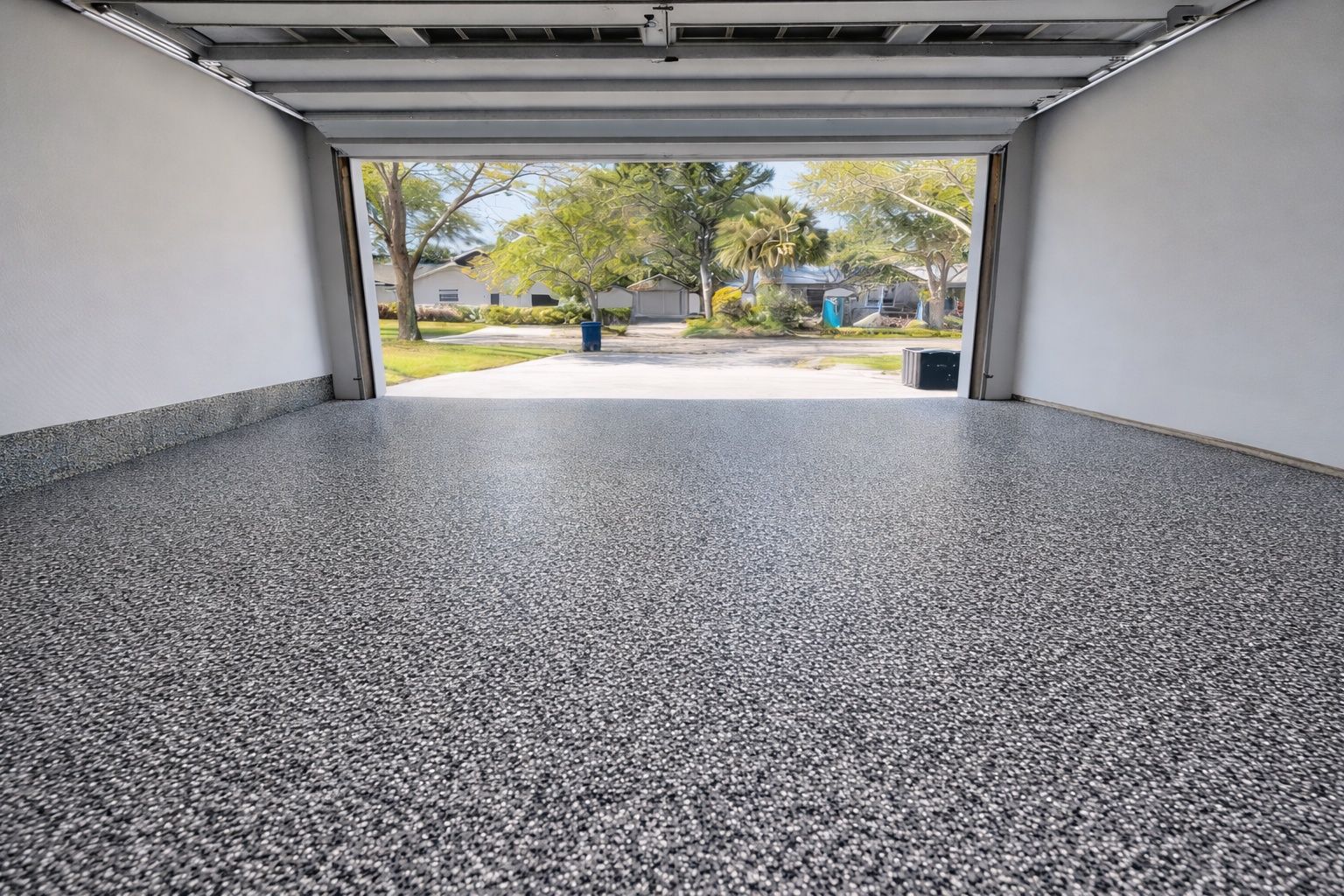
What Changes After Garage Coating Completes
Floor preparation involves repairing cracks with epoxy or polyurea fillers, grinding the surface to remove sealers and create a texture profile, and cleaning away all dust and contaminants. The base coat of epoxy is rolled or squeegeed onto the prepared surface, followed by flake broadcast or metallic pigment application depending on the selected system. A clear topcoat seals the decorative layer and adds UV resistance to prevent yellowing in garages with windows or frequent door openings.
The finished floor shows a uniform, glossy surface that brightens the garage by reflecting overhead lighting more effectively than bare concrete. Oil drips from vehicles bead on the surface rather than soaking in, and tire marks wipe away with standard cleaners instead of becoming permanent stains. The coating also eliminates concrete dusting, which reduces the fine gray powder that previously accumulated on stored items and vehicle surfaces.
Long-term floor protection depends on proper surface preparation and coating thickness, with full-broadcast flake systems offering better abrasion resistance than single-color epoxy in high-traffic areas. Coatings include crack repair and surface profiling, but structural slab repairs or moisture mitigation for below-grade garages require additional preparation. Design options range from subtle neutral flakes that blend with any decor to bold metallic finishes that create a showroom appearance.
What Property Owners Usually Ask
Homeowners considering garage floor coatings typically want to understand installation timing, performance differences between systems, and how to maintain the surface long-term.
What is the difference between flake and metallic garage floor systems?
Flake systems broadcast colored vinyl chips into the epoxy for texture and a speckled appearance, while metallic systems use reflective pigments that create depth and color variation similar to polished stone or stained concrete.
How do you prepare floors with existing coatings or paint?
Existing coatings are removed through diamond grinding that also profiles the concrete, ensuring the new epoxy bonds to clean concrete rather than a failing layer that could delaminate later.
When can vehicles be parked on the floor after coating?
Most epoxy systems allow light foot traffic within twenty-four hours and full vehicle traffic within seventy-two hours, though complete cure takes up to seven days depending on temperature and humidity conditions.
How does hot tire pickup affect coated garage floors?
Properly cured epoxy resists hot tire pickup because the coating does not soften under heat like unsealed concrete, though parking on cardboard for the first week after installation prevents any risk during the final cure period.
What maintenance does a coated garage floor require?
Routine cleaning with pH-neutral cleaners and occasional degreasing maintains appearance, while avoiding abrasive scrubbing pads prevents scratching the topcoat, and most residential garage coatings last ten to fifteen years before requiring recoating.
Corby Stain & Seal prepares garage floors to ensure maximum coating adhesion and installs systems designed for the specific wear patterns residential garages experience. Contact us to schedule a garage evaluation and review coating samples that demonstrate flake density and color options.