Natural Stone Protection Against San Antonio Sun
Flagstone Sealing & Restoration in San Antonio for patios and walkways exposed to UV damage and moisture infiltration
Sealed flagstone patios and walkways maintain consistent color and resist the surface erosion that turns natural stone powdery and dull after years of sun exposure. Unsealed flagstone in San Antonio fades unevenly as UV radiation breaks down the stone's surface minerals, and moisture penetration during rare freezes can cause spalling when water expands in the stone's pores. Corby Stain & Seal applies color-enhancing sealers and joint stabilization systems to residential and commercial stone surfaces, preserving the stone's appearance and preventing the loose joints that create tripping hazards.
The sealing process cleans the stone to remove embedded dirt and organic growth, stabilizes joints with polymeric sand or grout, and applies penetrating sealers that enhance the stone's natural tones without creating a glossy film. Weather protection comes from the sealer's ability to block water absorption while allowing vapor transmission, which prevents subsurface moisture from becoming trapped and causing efflorescence.
Request a stone surface evaluation to determine the sealer type and joint stabilization method appropriate for your installation's age and condition.
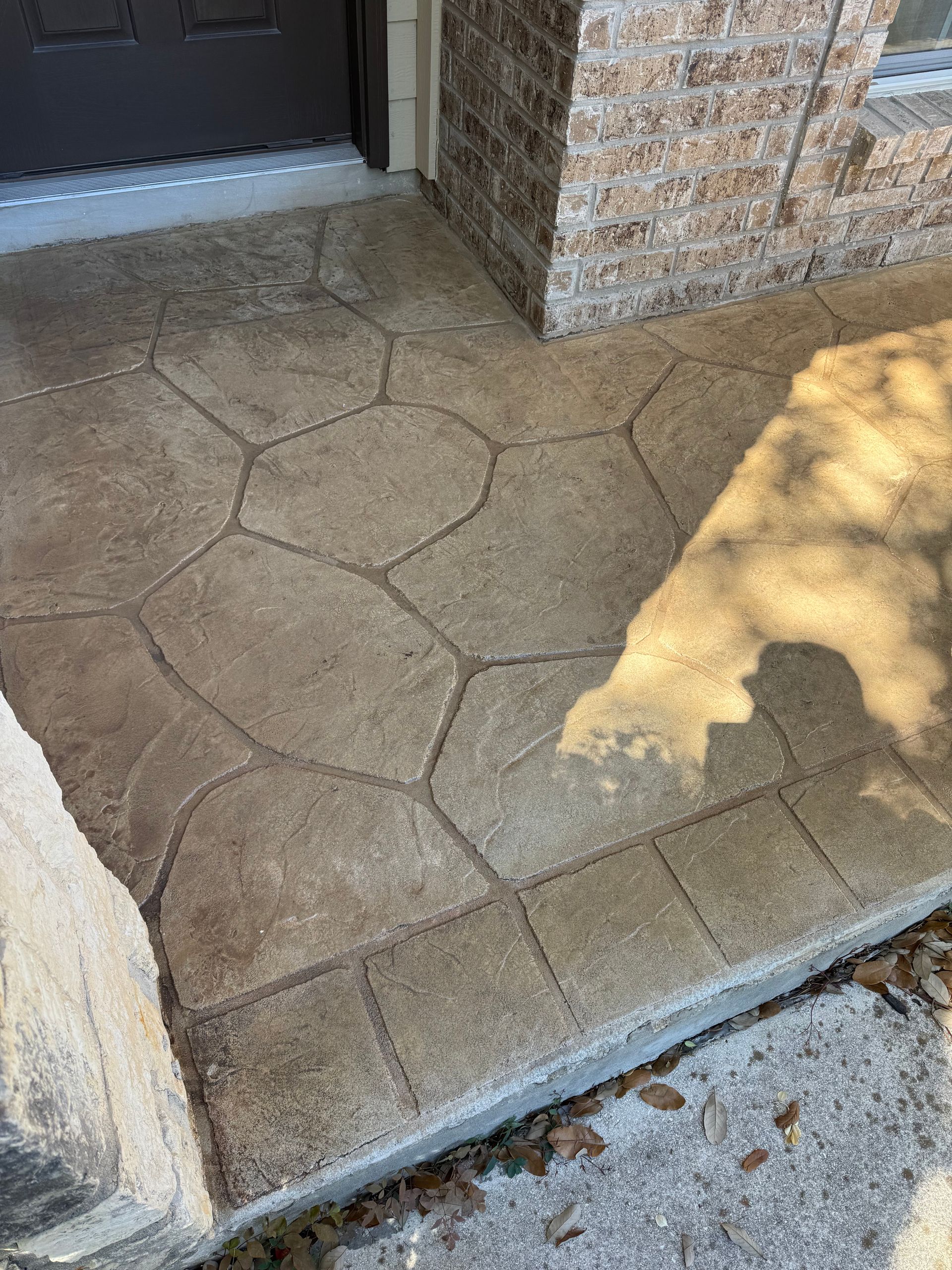
What You Notice Once Flagstone Is Sealed
Restoration begins with pressure washing to remove surface contaminants, followed by joint cleaning and repair where sand or grout has washed out. Color-enhancing sealers are applied after the stone dries completely, deepening the stone's natural hues and creating a wet look that highlights color variations. Joint stabilization involves filling gaps with polymeric sand that hardens when activated with water, or applying flexible grout that accommodates minor stone movement without cracking.
Sealed stone sheds water during rain instead of absorbing it, which prevents the dark staining that appears when moisture soaks into porous stone and brings subsurface minerals to the surface. Colors remain vibrant rather than fading to a washed-out gray, and the stone surface resists staining from organic debris like leaves or pollen. Stabilized joints eliminate the loose sand that kicks up onto the stone surface and reduces the weed growth that exploits gaps between pieces.
Sealing services include cleaning and joint preparation, but do not address structural issues like significant stone settling or failed base material that requires excavation and reinstallation. Properties with drainage problems need grading corrections before sealing to prevent water from pooling on the stone surface. Sealer longevity depends on sun exposure and foot traffic, with reapplication typically needed every two to four years to maintain protection.
Answers to Frequent Service Questions
Property owners usually ask about sealer types, maintenance needs, and how to handle existing stains or damage before sealing.
What is the difference between film-forming and penetrating sealers?
Penetrating sealers soak into the stone's pores to provide protection without changing surface texture, while film-forming sealers create a topical layer that can peel or wear away in high-traffic areas.
How do you remove existing stains before sealing?
Oil-based stains are treated with poultice applications that draw contaminants out of the stone, while organic stains from leaves or algae are removed through cleaning agents formulated for natural stone that won't etch the surface.
When should flagstone be cleaned and resealed?
San Antonio's intense UV exposure degrades sealers faster than in shaded or cooler climates, so most flagstone surfaces need cleaning and resealing every two to three years to maintain water resistance and color enhancement.
What happens to joints between flagstone pieces over time?
Unsealed joints allow sand to wash out during heavy rains, creating gaps where stones shift and settle unevenly, which is why stabilization with polymeric sand or grout becomes necessary during restoration.
How does sealing affect the stone's slip resistance?
Penetrating sealers maintain the stone's natural texture and slip resistance, though some wet-look enhancers can reduce traction slightly when the surface is wet, making sealer selection important for pool decks and high-traffic walkways.
Corby Stain & Seal matches sealer formulations to stone type and exposure conditions, ensuring long-term protection without altering the stone's natural character. Schedule a consultation to review your flagstone's current condition and receive maintenance recommendations tailored to San Antonio's climate.